
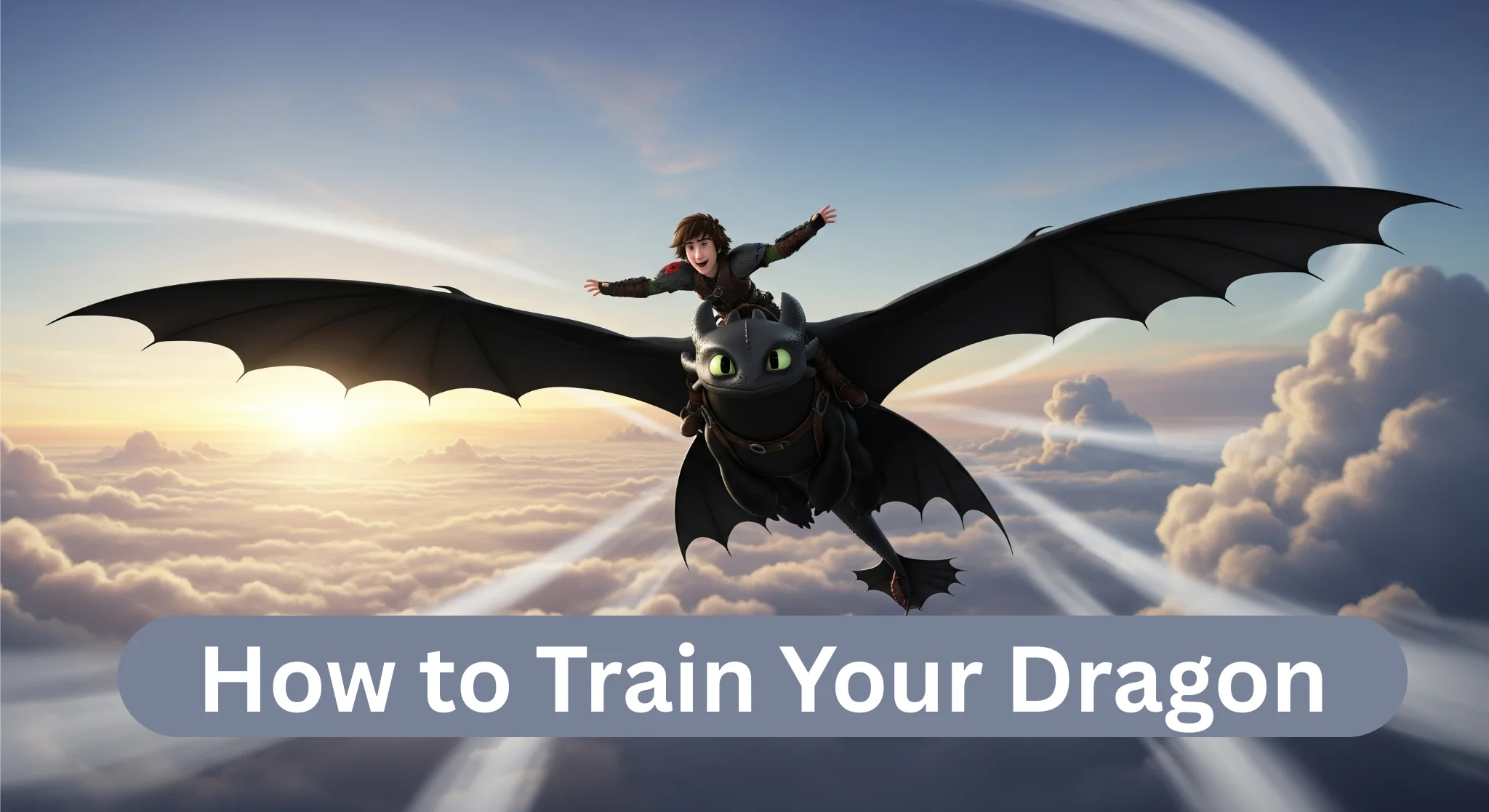
Let’s be real—“training a dragon” sounds kind of ridiculous, right? Like something your brain would dream up after binge-watching fantasy films or listening to bedtime stories as a kid. But thanks to the How to Train Your Dragon movies, books, and yes—even video games—we’ve all pictured it at least once. Be honest: who hasn’t imagined flying through the sky on a dragon’s back, wind in your face, feeling unstoppable?
Here’s the thing, though: this story isn’t just about fire-breathing beasts or epic battles. The heart of How to Train Your Dragon is actually about people, trust, and learning to see the world in a new way. Underneath the action and flying scenes, it’s really a story about connection—especially with things (or people) we don’t quite understand.
So, in this guide I’ll walk you through the whole deal: what How to Train Your Dragon is really about, how it all works in the story, the real-life lessons hidden inside, free vs paid ways to watch (yes, I’ll be honest), a nerdy security deep dive for parents, step-by-step “training” tips, case studies, and even FAQs where we dig into the quirky, the fun, and the surprisingly deep stuff.
Let’s dive in—because dragons aren’t gonna train themselves.
What is How to Train Your Dragon?
So, what exactly is this thing? How to Train Your Dragon actually started out as a kids’ book series by Cressida Cowell before DreamWorks turned it into a massive animated trilogy. But calling it “just a movie” doesn’t really capture it. It’s an entire world filled with Vikings, sky-shattering flights, and friendships you wouldn’t expect.
The story centers on Hiccup, an awkward Viking kid who doesn’t fit in with his dragon-slaying tribe. Instead of killing the scary Night Fury he stumbles across, he does something nobody expects—he helps it. Crazy, right? But that one choice flips his entire life (and honestly, his whole community) upside down.
At its core, the franchise is about courage, leadership, acceptance, and yep—learning how to train a dragon. But really, it’s a bigger metaphor: do we destroy what we fear, or do we try to understand it? That’s where the magic kicks in.
And it’s not just movies anymore. There are spin-off shows, games, comics, and endless fan art. Even in 2025, the franchise still feels alive. Why? It nails that balance between thrilling fantasy and human storytelling.
How It Works
Alright, let’s talk mechanics—how do you actually train a dragon (in the story, anyway)? Spoiler: it’s not about chains and cages. It’s about connection. Hiccup figures out pretty quickly that fear and force only make dragons fight harder.
Step one is observation. Watch them. Notice the quirks—the little tail flicks, the body language. Then, patience. You approach slowly, you don’t wave weapons in their face, and hey, maybe bring a snack. (Food solves a lot of problems, let’s be honest.)
From there, it’s communication, not with words, but with signals and trust. And eventually, commands come into play—but only after the bond is there.
It’s less about “dominating a beast” and more about friendship. The dragon learns to trust, and the human earns a loyal ally who just so happens to be able to torch enemies or soar through the clouds. Not bad, huh?
And honestly, swap “dragon” for “dog,” “coworker,” or “teenager,” and it still holds up. You don’t force relationships. You nurture them.
That’s why the franchise works—it’s one giant metaphor for building trust in life.
Benefits of How to Train Your Dragon
Alright, here’s the fun part: why does this matter to you or me? Because, shocker, a fantasy film can actually improve your outlook on real life.
Trust Isn’t Instant
Hiccup and Toothless teach us that trust takes time. That lesson translates everywhere—from friendships to parenting to working with that coworker who rubs you the wrong way.
Empathy Is Everything
Instead of fighting “the enemy,” Hiccup took the time to understand. Imagine if more people did that… on social media, in politics, in life.
Facing Fear
Dragons literally represent fear here. And when Hiccup tames Toothless, he’s taming his own insecurities too. Personally? I’ve faced plenty of “dragons” (hello, public speaking), and this story always reminds me to breathe and face it calmly.
Escapism That Feels Good
Sometimes you don’t need deep meaning—you just need fun. Flying dragons, epic music, goofy characters… that alone is a mental health boost.
A Quick Story
A friend of mine used to watch these films with his daughter every weekend. He told me it helped him explain big, tough ideas like courage and trust to her in ways she actually got. That’s when you realize this series isn’t just “entertainment.” It’s a parenting tool in disguise.
Bottom line? How to Train Your Dragon isn’t just popcorn fun—it’s sneaky life advice wrapped in fire-breathing fantasy.
Free vs Paid
Okay, real talk: how do you watch How to Train Your Dragon in 2025? You’ve basically got two options.
Free Stuff: YouTube clips, wikis, maybe the odd rerun on TV. It’s like snacking—you’ll get a taste, but not the full meal. The fan communities are great, though; tons of free art, memes, and theories.
Paid Stuff: Streaming services like Netflix, Prime, or Peacock rotate the trilogy. Or you can rent/buy them digitally (my recommendation if you hate when stuff randomly disappears). And don’t sleep on the books—they’re a whole different vibe from the films.
Which Is Better? Free works for quick nostalgia hits, but if you want the full package—emotional arcs, stunning animation, soundtracks that give goosebumps—you’ve gotta pay. Think about it: you wouldn’t skim one random page of a novel and say you’ve “read it,” right? Same idea here.
For me I started with free clips and then caved. Worth it.
Security Deep Dive
Parents always ask: “But is it safe for kids?” Short answer—yes. Longer answer—let’s unpack.
-
Violence? Sure, there are fights, but it’s stylized. More “epic Viking showdown” than “Game of Thrones bloodbath.”
-
Themes? Totally wholesome—courage, teamwork, empathy. Even the fights usually end with the message that violence isn’t the answer.
-
Ratings? PG. Most 6–7-year-olds can handle it.
That said, let’s be real: every kid is different. Some will laugh at dragon fire, others will hide under the couch. Luckily, the humor and warmth balance the tension really well.
One thing to watch: YouTube clips or spin-off games. The movies themselves are safe, but online fan uploads? Not always filtered, and the ads can be sketchy.
Personally? Compared to some of the darker “kids’ content” floating around, this series feels refreshing. It entertains and teaches values, which is rare these days.
Step-by-Step Dragon Training
Wanna know how to “train” one yourself? Let’s break it down:
-
Observe – Don’t rush. Watch its behavior first.
-
Approach Slowly – Chill, no charging in.
-
Offer Food – Everyone loves snacks.
-
Communicate – Look for signals. Respect goes both ways.
-
Small Commands – Start simple: sit, stay. Reward wins.
-
Build Trust – This is a relationship, not domination.
-
Take Flight – Once you’ve bonded, you fly.
Honestly, swap “dragon” with “friendship,” and it’s still solid advice.
Best Picks for 2025
If you’re just diving in now, here’s my hit list:
-
The Original Trilogy (mandatory)
-
The series Dragons: Race to the Edge has bonus lore
-
The books, if you want a quirky, different take
-
The School of Dragons game (still has fans)
-
The soundtracks—seriously, perfect study or road trip music
DreamWorks has hinted at more spin-offs, so buckle up—this world isn’t going away.
Case Studies
Hiccup & Toothless
Their bond started with compassion instead of violence. That single decision reshaped their whole world. Moral? Sometimes kindness is the boldest move you can make.
Valka’s Sanctuary
Hiccup’s mom spent years living with dragons, not controlling them but respecting them. The result? A thriving dragon haven. Lesson: real leadership is about creating safe spaces, not fear.
FAQs on How to Train Your Dragon
1. Is How to Train Your Dragon just for kids?
Not really. I mean, yeah—it’s animated, it’s colorful, dragons make goofy faces—so on the surface, it screams “kids’ movie.” But let’s be real: adults fall for it just as hard, sometimes harder. The humor hits on two levels (a bit like Shrek, but less wink-wink), and the emotional punches? Way heavier than you’d expect. The third movie… oof. I know grown men who cried harder than their kids. (Honestly? Same.) So sure, kids get the dragons and laughs, but adults? We get the heartbreak and lessons about life. That’s why it’s stuck around—it works for everyone.
2. Can the lessons from How to Train Your Dragon actually apply in real life?
Surprisingly, yeah. You’re not gonna stroll outside and bump into a Night Fury (sadly), but the values translate. Hiccup doesn’t “win” because he’s the strongest Viking swinging the biggest axe—he wins because he listens, stays patient, and builds trust. That’s the same formula you need when training your dog, fixing a friendship, or dealing with a grumpy coworker. I half-joke about using the “dragon method” on my cat (treats + patience = peace), but it works. So no, you won’t be riding a dragon anytime soon—but you can steal the playbook for everyday life.
3. What’s the best way to start training your dragon in the story?
Patience. That’s literally the secret sauce. Hiccup doesn’t rush Toothless—he sits, he waits, offers a fish, and lets trust build piece by piece. It’s such a simple approach, and honestly? Kind of brilliant. Funny how it mirrors real life. First date? New job? Meeting someone’s shy pet? If you charge in all loud and intense, it backfires. But if you take it slow, respect boundaries, and keep showing up, people (and dragons) start to trust you. Crazy that a “kids’ movie” nails a truth most adults still fumble with.
4. Why is Toothless so important in How to Train Your Dragon?
Because he is the story, let’s be honest. Without Toothless, Hiccup doesn’t grow, the Vikings don’t change, and the whole plot collapses. Toothless is feared as this mysterious, deadly Night Fury, but under that? He’s basically a giant goofy cat with wings. Loyal, playful, sometimes clumsy. The friendship between Hiccup and Toothless flips everything upside down—for them, for Berk, for dragons in general. And c’mon… the derpy grins, the awkward crash landings, those catlike head tilts—tell me you didn’t fall for him. He’s unforgettable, and honestly, the main reason half of us stuck through all three films.
5. Is How to Train Your Dragon safe for kids?
Yep, pretty much as safe as family adventure movies get. PG rating, some battles, but nothing bloody or nightmare-inducing. Think “thrilling adventure” rather than “traumatizing violence.” Sure, there are roars and fireballs, but the themes lean positive—kindness, teamwork, courage. That said, let’s be fair: kids are different. Some will laugh at dragon fire, others might dive under the blanket. But compared to the darker stuff aimed at kids nowadays, this series feels almost wholesome. Honestly, if you’re a parent looking for something safe that still has substance, this one’s a solid pick.
6. How does flying play into dragon training?
Flying’s the ultimate trust test. Hiccup and Toothless’s first flight? Total chaos. Wobbly, scary, awkward—you’re watching thinking, “Oh no, this kid’s gonna fall.” But that’s the point. Trust means taking risks together. And when they finally figure it out? Absolute magic. I’ll go on record: those flying scenes are some of the best animation ever made. They’re not just “cool visuals,” they symbolize freedom, partnership, and letting go of fear. The first successful flight is when they officially stop being trainer + dragon and become… well, partners for life.
7. Why is Hiccup different from other dragon trainers?
Because he doesn’t play by the Viking rulebook, everyone else believes power = control, and control means violence. Hiccup goes, “What if we… don’t?” And that one thought changes everything. He experiments, he fails a ton, he gets laughed at, but he keeps trying. To be fair, he’s awkward and clumsy—but that makes him more relatable, right? His weakness becomes his strength. He’s proof that leadership isn’t about yelling louder than everyone else. It’s about empathy, creativity, and being brave enough to do things differently. Honestly? Pretty revolutionary for a cartoon Viking kid.
8. What’s the ultimate message of How to Train Your Dragon?
If I had to put it in one line: trust changes everything. The trilogy basically whispers, “The stuff you’re afraid of? Might actually be your ally if you give it a chance.” Dragons = fears. And Hiccup shows that with patience (and let’s be real, a lot of fish), enemies can become friends, and fear can turn into freedom. Yeah, it sounds corny—but it’s the kind of corny that sticks. The deeper message is that love and understanding can reshape your whole world. That’s why these films still hit hard, even years later.
Conclusion
At the end of the day, How to Train Your Dragon isn’t about dragons—it’s about us. Our fears, our relationships, and our ability to grow when we choose trust over fear.
Whether you’re rewatching it for the tenth time or stumbling on it fresh in 2025, the magic holds. Because let’s face it: we all have “dragons” in life—some scary, some beautiful. The good news? With patience, courage, and a little trust, they’re not impossible to train.
Learn About Check Instagram Password

Leave a Reply