
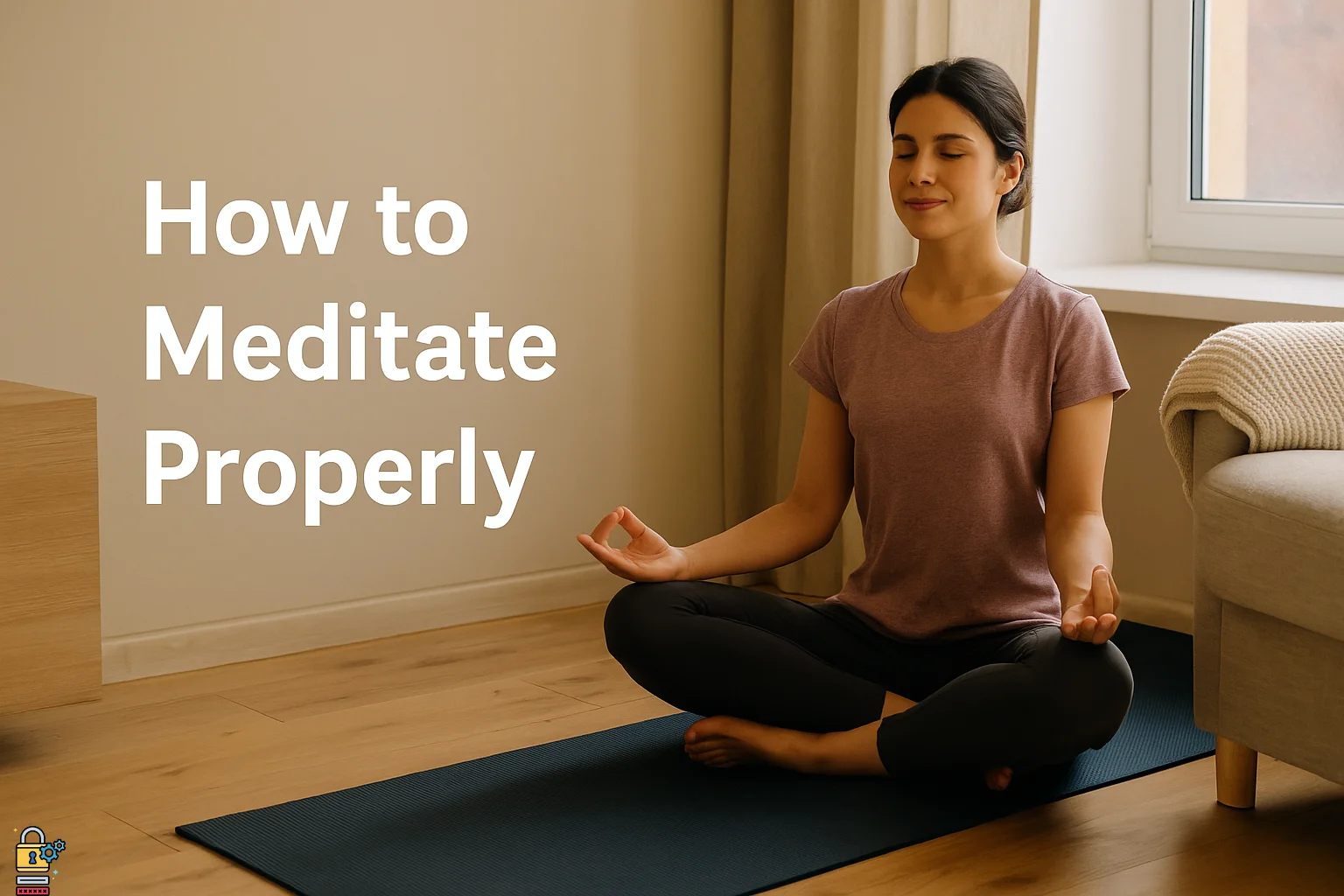
Let’s be real for a second, life these days feels like a never-ending race. Between work, endless scrolling, and just life, stress, anxiety, and mental burnout hit harder than ever. No wonder so many people (maybe you too?) end up Googling stuff like “how to meditate properly.”
I’ll be honest, my first attempt at meditation was kind of a disaster. I sat on the floor, closed my eyes, and thought, “Okay, let’s clear my mind.” Within two minutes, I was planning what to eat for dinner, replaying an embarrassing high school memory (why does that always pop up?!), and stressing about tomorrow’s meeting. I got annoyed, stood up, and decided meditation wasn’t “for me.”
Later, I realized meditation isn’t about “emptying” your mind at all. It’s more about noticing what’s going on without letting it drag you around. Once that clicked, things started to shift.
So if you’re a student stressing over exams, a professional juggling deadlines, or just someone craving a little peace, meditation can genuinely change your life (if you learn to do it properly). In this post, we’ll break down what meditation really is, how it works, the benefits, some personal stories, step-by-step tips, free vs paid tools, and even a couple of real-life case studies.
What is Meditation?
Here’s the thing: meditation isn’t some mystical practice reserved for monks on mountaintops. At its core, it’s simply training your mind to focus and stay present.
It’s not about “forcing” thoughts away — that doesn’t work (trust me, I’ve tried). It’s about letting thoughts come and go without freaking out about them. Think of it as creating a little breathing room between you and the nonstop chatter in your head.
Fun fact: the word “meditation” comes from the Latin meditatum, which literally means “to ponder.” Ancient traditions in India, China, and Tibet used it for spiritual growth. Today, modern science has pretty much confirmed what those old masters already knew — meditation reduces stress, sharpens focus, and makes you more resilient.
When we talk about how to meditate properly, it really boils down to a few simple pillars:
-
Posture → Sit upright but not stiff.
-
Breath → Pay attention without trying to control it.
-
Focus → Let your attention rest on something simple, like your breath, a sound, or a calming word.
-
Consistency → Do it daily, even if it’s just five minutes.
👉 To be fair, it’s not just “woo-woo.” A Harvard study found that eight weeks of mindfulness meditation actually increased grey matter in areas of the brain linked to memory and empathy. Pretty wild, right?
Bottom line: meditation isn’t fluffy spiritual stuff — it’s legit brain training.
How Meditation Works
Meditation works like exercise for the mind, building strength and flexibility where you need it most. Instead of push-ups and squats, you’re doing mental reps.
Here’s the cycle you’ll run into (again and again):
-
Anchor → You focus on your breath or maybe a mantra.
-
Mind Wanders → Suddenly, you’re thinking about that one email you forgot to send.
-
Awareness → You realize, “Oops, my mind drifted.”
-
Return → You gently bring yourself back.
That’s it. And here’s the kicker: the magic isn’t in staying perfectly focused 100% of the time (spoiler: nobody does). The real practice lies in noticing when you drift and gently returning. That’s the rep. That’s the workout.
👉 Personal note: Before presentations, my heart used to pound like crazy. After a few months of meditation, yeah, I still felt nervous — but I didn’t spiral. I’d notice my body’s reaction, breathe, and keep going. That’s what proper meditation gives you: not a “perfectly calm” life, but tools to handle the chaos.
Benefits of Meditating Properly
So what’s in it for you if you actually stick with meditation? Honestly… a lot. Let’s run through the big ones.
1. Stress Reduction
Meditation lowers cortisol (your stress hormone). Google even found in a study that employees who meditated daily reported 30% lower stress levels. Not bad for just sitting still.
2. Better Sleep
I used to doomscroll before bed (don’t judge, we’ve all been there). Switching to 10 minutes of meditation at night killed my insomnia in weeks. My brain finally had an “off” switch.
3. Improved Focus
Your brain literally rewires. The prefrontal cortex (the “focus center”) gets stronger. Regular meditation practice can help students concentrate better during exams and improve memory recall.
4. Emotional Balance
Through meditation, you learn to respond calmly instead of overreacting. Relationships get smoother, and problems feel less like brick walls.
5. Physical Health
Lower blood pressure, stronger immunity, healthier heart. Meditation starts in the mind, yet its effects ripple through the body.
👉 In short: when done properly, meditation upgrades both mind and body. Like an all-in-one software update, but for you.
Free vs Paid Meditation Options
People always ask, “Do I really need an app or a retreat, or can I just wing it?” Honestly, both work. Here’s the breakdown.
Free Options
-
YouTube is full of guided meditations.
-
Books/blogs give you step-by-step guides.
-
Or just sit quietly and practice on your own.
Pros: Free, flexible, no excuses.
Cons: Harder to stay consistent, less structure.
Paid Options
-
Apps like Headspace, Calm, or Insight Timer (guided sessions, sleep sounds, progress tracking).
-
Retreats for deep immersion.
-
1-on-1 coaching if you want personalized support.
Pros: Structure, accountability, motivation.
Cons: Costs money (sometimes a lot).
👉 My two cents: start free. Once you’re serious, apps or retreats can help you level up.
Meditation Safety (Yep, There’s Such a Thing)
Most people assume meditation = harmless. And yeah, generally it is. But — and this is important — if you dive in recklessly, there are a few things to watch for.
Common Issues
-
Pushing too hard too soon → frustration.
-
Bad posture → sore back/knees.
-
Old emotions bubbling up → overwhelming for some.
Safety Tips
-
Start small (5–10 minutes is plenty).
-
Make sure you’re comfy.
-
Don’t chase instant bliss.
-
If tough stuff surfaces, maybe check in with a teacher or therapist.
👉 True story: A friend of mine had old trauma resurface during solo meditation, and it freaked her out. Once she worked with a teacher, she learned grounding tricks,s and now meditation is actually healing, not scary.
Meditation is powerful, but just like anything else, balance is key.
Step-by-Step: How to Meditate Properly
Here’s your simple game plan:
-
Find a quiet spot.
-
Sit however you’re comfortable (chair or cushion, doesn’t matter).
-
Set a timer — 5 to 10 minutes max to start.
-
Close your eyes. Just breathe. Don’t force it.
-
Mind drifts? (It will.) Notice it. Gently come back.
-
After a while, expand awareness — notice your body, sounds, etc.
-
End slowly. Open your eyes. Stretch. Done.
👉 Pro tip: don’t aim for “deep Zen master.” Aim for “I showed up today.” That’s how you build the habit.
Best Meditation Picks for 2025
If you like a little help, here are the top tools right now:
-
Best for newbies: Headspace (fun animations, super simple).
-
Best for sleep: Calm (the bedtime stories make it easy to drift off).
-
Best free option: Insight Timer (huge library).
-
Best for focus at work: Balance.
-
Best retreat: Vipassana 10-Day Silent Retreat (life-changing if you can commit).
But honestly? Tools are secondary. What matters is, you guessed it, practice.
Case Studies
Sarah, the Burned-Out Professional
Sarah, a marketing manager, was toast. Overworked, under-rested. She started meditating 10 minutes before work. Two months in? Fewer headaches, more patience, sharper focus in meetings.
Ali, the Anxious Student
Ali had brutal exam anxiety. He started with free guided meditations on YouTube. A semester later, he was sleeping better, panicking less, and — bonus — his grades improved.
FAQs
1. What’s the proper way to meditate daily?
Sit upright, close your eyes, focus on your breath, and do 5–10 minutes. That’s it.
2. How can beginners learn how to meditate properly?
Guided meditations (apps, YouTube) make it easier. Start short, build up.
3. Can I meditate without a teacher?
Sure, a teacher makes things easier, but you can absolutely do it on your own.
4. How long should I meditate every day?
Start with 5 minutes. Work up to 15–20.
5. What’s the best position?
Anything comfy but upright. Chair, cushion, whatever works.
6. Is meditation religious?
Not really. It’s secular for most people now.
7. Can it help with anxiety?
For sure. It calms the nervous system and helps you stay grounded.
8. Is meditation safe?
Yes, generally. But if you’ve got trauma, it’s best to practice with support.
Conclusion
Here’s the truth: meditation isn’t about being perfect — it’s about being present. You’ll mess up, get distracted, maybe even get frustrated. Totally normal. But keep showing up, and it’ll start to click.
Start small. Five minutes is plenty. Use your breath as your anchor. And don’t worry about “doing it right” — the act of trying is the practice.
👉 Remember: meditation won’t stop your thoughts. It just changes how you relate to them. And honestly, that’s where the real peace lives.
If stressed-out CEOs, overworked students, and busy parents can make meditation work, so can you. Take a breath, close your eyes… and begin.
Learn about How to Meditate

Leave a Reply