
A few years ago, one of my close friends bought a “Kanjivaram silk saree” for her wedding. She was thrilled — it looked rich, heavy, and the shopkeeper swore it was authentic. But just a couple of months later, the shine faded, the zari threads started breaking, and she realized she had spent thousands of rupees on a fake. Painful lesson.
This happens to so many buyers, especially first-timers, who honestly don’t know how to test whether a saree is truly Kanjivaram silk or just a convincing imitation.
Kanjivaram sarees aren’t just another outfit. They’re a legacy of South India’s culture, often called the queen of silks. Woven in the temple town of Kanchipuram, Tamil Nadu, they carry centuries of artistry, storytelling, and tradition. A genuine Kanjivaram can last generations and often becomes a family heirloom passed from mothers to daughter.
But with machine-made duplicates and cheap alternatives flooding the market, it’s getting harder to identify the real ones. And the fakes are so visually convincing that unless you know the right signs, you can be fooled.
That’s why I’ve put this guide together — to share not only technical tips but also personal insights and real-life examples. By the end, you’ll know how to spot a genuine Kanjivaram silk saree and make sure your money is going into something truly worth it.
Signs of an Original Kanjivaram Saree
When you hold a Kanjivaram saree, it just feels different, not only in weight but in presence. A pure one doesn’t just “look pretty,” it commands respect. So, how do you really know it’s authentic? Here are the key signs.
Silk Mark Certification – Why It Matters
Like gold has a hallmark, real Kanjivarams usually come with a Silk Mark tag from the Silk Mark Organisation of India. That little tag is your first shield against fakes.
I recall stopping by a store in Chennai, where the salesperson enthusiastically pointed out the Silk Mark sewn into the border. He said, “If this tag is missing, you should question the saree’s authenticity.” He was right. Fake sellers rarely bother because certification costs money and requires proof of genuine weaving.
👉 Always check for this tag. If it’s missing, ask why.
Traditional Weaving Techniques – The Korvai
A true Kanjivaram isn’t stitched like regular fabric. It’s woven in three parts — body, border, and pallu — and then joined so neatly with the korvai technique that the join is invisible.
A friend once showed me her grandmother’s saree, woven nearly 40 years ago. Even today, the border and pallu shine like new, and you can’t tell where they were joined. That’s korvai magic. Fakes? They usually have weak joins or sloppy machine stitching.
Temple Borders, Checks & Motifs
Kanjivarams are rooted in South Indian tradition. You’ll often see temple borders (gopuram style), checks, floral buttas, and motifs like peacocks, swans, and chariots.
When I visited Kanchipuram, a weaver proudly told me, “Every motif has a story. We don’t just weave threads; we weave culture.” That storytelling is hard to copy. Fakes usually have flat, lifeless designs instead of rich woven patterns.
How to Test a Real Kanjivaram Silk Saree at Home
It’s not always possible for everyone to visit Kanchipuram or purchase sarees directly from the artisans. Most of us shop in city stores or online, where the risk of fakes is higher. Luckily, there are a few simple checks you can do at home.
The Touch & Texture Test
Trust your fingers. Pure Kanjivaram silk feels heavy yet smooth. Run your hand across it — it shouldn’t feel slippery like synthetics.
I remember shopping for sarees in Hyderabad with my cousin one time. She picked up two sarees that looked almost identical. The difference was obvious when she touched them. The fake was plasticky and soft, while the real Kanjivaram had that reassuring weight, almost as if it was saying, “I’m built to last.”
The Burn Test
Old-school but effective. Snip a hidden thread and burn it carefully.
-
Genuine silk emits a scent similar to burnt hair and disintegrates into ash when burned.
-
Imitation silk melts into a plastic-like substance and releases a synthetic odor.
An elderly weaver once told me, “Silk is natural, so it burns like life. Fake burns like plastic.” Couldn’t have put it better myself.
The Zari Test
The zari (the golden border) is another giveaway. In genuine sarees, zari is woven with real silver and gold plating. To check, scratch a zari thread gently:
-
Pure zari shows a red silk thread inside.
-
Fake zari reveals white or synthetic thread.
My aunt once tested her pricey saree from Delhi this way and found plastic inside the zari. She returned it the very next day.
Difference Between Pure and Fake Kanjivarams
Fabric Feel & Shine
Pure Kanjivaram has a graceful, natural sheen — soft under lights, elegant in daylight. Fake ones shine too harshly, almost plasticky.
I saw it at a family wedding: two women in similar sarees. One glowed with elegance, the other reflected stage lights like a mirror ball. Easy to tell which was fake.
Price Difference – A Big Clue
Let’s be real — a pure Kanjivaram is never cheap. Since it’s handwoven with silk and zari, prices usually start at INR 10,000–15,000 and can go over a lakh.
If someone’s offering one for INR 2,500, you know it’s fake. It’s like someone selling you “real gold” at artificial jewelry prices.
Weight, Thickness & Durability
Authentic Kanjivaram sarees have a substantial weight and thickness due to the rich silk threads and the intricate korvai weaving technique. They last for decades if cared for. Fakes? Lightweight, flimsy, and they lose shine fast.
My grandmother still owns a 35-year-old Kanjivaram that looks stunning even today. Compare that with my friend’s “cheap deal” saree that lost its luster in six months. That’s the difference.
Why Authentic Kanjivarams Are Valuable
Handloom Effort & Craftsmanship
Every genuine Kanjivaram takes 10 days to several months to weave. Skilled artisans carefully join the body, border, and pallu.
At an exhibition in Tamil Nadu, I spoke to a weaver who said, “One saree is like my child. Each design is carefully chosen, and every thread is crafted with care. It’s more than just a task; it’s a form of reverence.” That statement has always stuck with me.
Investment Value
Like gold, pure Kanjivarams don’t lose value. Families often preserve them for generations. My grandmother’s wedding saree — a maroon Kanjivaram with gold zari — is nearly 40 years old, yet when she wore it at my cousin’s wedding, everyone was stunned at how new it still looked.
Cultural & Bridal Importance
For South Indian brides, a Kanjivaram isn’t just wedding attire. It’s pride and tradition. Many families believe no bridal trousseau is complete without at least one authentic piece.
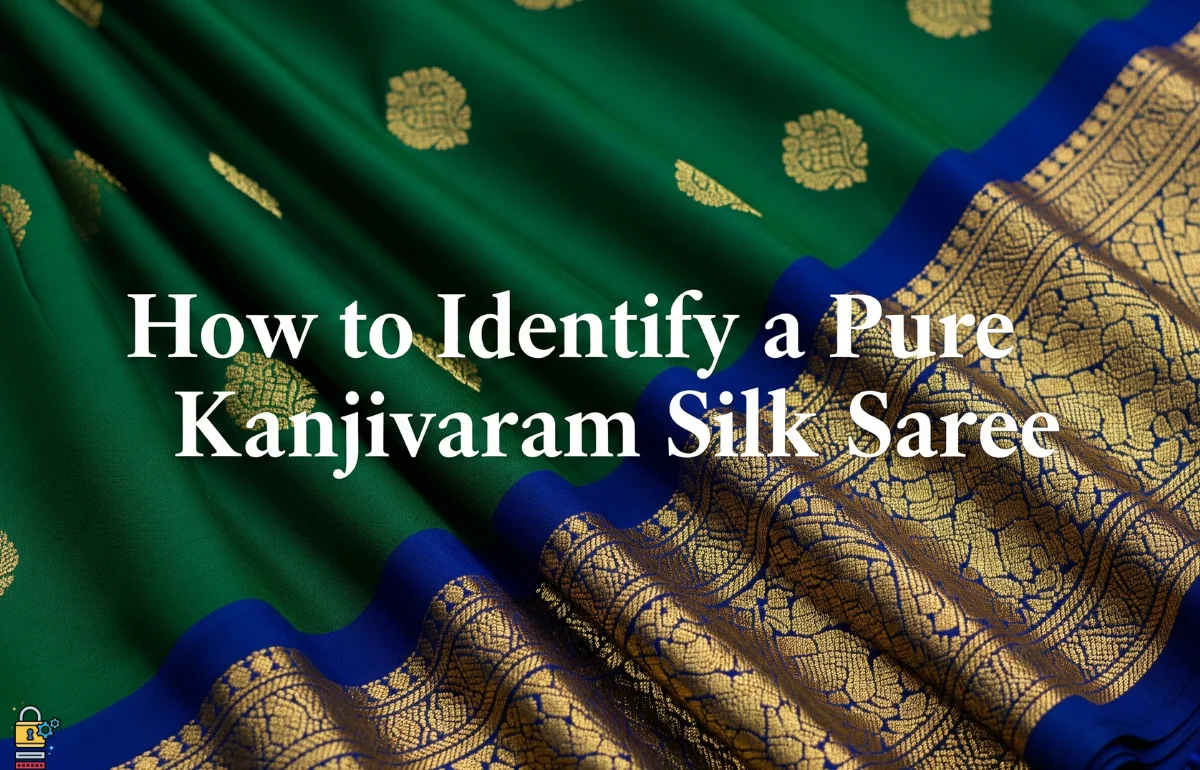
I recall attending a Tamil wedding where the bride dazzled in a vibrant emerald green Kanjivaram, featuring intricate temple motifs. When she walked in, the saree almost glowed. People couldn’t take their eyes off her.
Tips for Buying an Original Kanjivaram Saree
Trusted Shops & Certified Sellers
Always start with reputed showrooms, cooperatives, or directly from weavers. My aunt once bought hers from a Silk Co-op Society in Kanchipuram. It came with a Silk Mark certificate, cost a bit more, but has lasted beautifully for over a decade.
Things to Check Online
Online shopping is tricky. Some sellers are genuine, but many push machine-made dupes. Before ordering:
-
Check customer reviews and real photos.
-
Look for Silk Mark certification.
-
Be wary of “discounted Kanjivarams” that seem too cheap.
A friend once ordered a saree online for INR 3,500. When it arrived, it looked nothing like the photos and had cheap polyester shine.
How to Avoid Scams
-
Too cheap = fake.
-
Scratch the zari thread.
-
Ask about weaving techniques.
A weaver once told me, “Real buyers ask questions. Fake sellers hate that. If they rush you, they’re hiding something.”
FAQs on Pure Kanjivarams
Q1: How do I know if my Kanjivaram saree is pure?
Check for the Silk Mark, feel the fabric’s weight, and test the zari thread. If still unsure, burn a small hidden thread — pure silk burns like hair.
Q2: What’s the difference between pure and imitation Kanjivarams?
Pure ones are handwoven from mulberry silk with real zari, and they last for decades. Imitations are machine-made, lightweight, and fade quickly.
Q3: How much does an original Kanjivaram cost?
Usually starts around INR 10,000–15,000 and can go beyond 1 lakh, depending on weaving and zari quality. Cheap ones are fake.
Q4: Can you identify one without a Silk Mark?
Yes, but it’s trickier. You’ll need to rely on weaving checks, zari tests, and texture. Certification is always safer.
Q5: What are the obvious signs of fake sarees?
Too light, slippery, overly shiny zari, white synthetic thread inside the zari, stitched borders instead of woven joins, and of course, suspiciously low prices.
Conclusion
Owning a Kanjivaram silk saree is like holding a piece of Indian tradition. This isn’t just cloth; it’s a blend of tradition and craftsmanship woven into every strand.
Now you know the signs: the Silk Mark, the korvai joins, the zari test, and even simple touch and feel. These checks will help you avoid imitations and buy something authentic.
As my grandmother once said, “A real Kanjivaram is like gold. It doesn’t lose value — it gains respect with time.” She’s right. It’s not just a saree; it’s an heirloom.
👉 Next time you shop, don’t get dazzled by fake shine. Look closer, ask questions, and invest in the real thing. A pure Kanjivaram silk saree is forever.
Learn Abut Original Kanjivaram Saree

Leave a Reply